Free spirit, child prodigy, restless traveler: the life and works of Wolfgang Amadeus Mozart are connected with Salzburg.
But he wasn’t too lucky in this country. His monument, which has dominated the square named after him since September 5, 1842, had it better in the end.
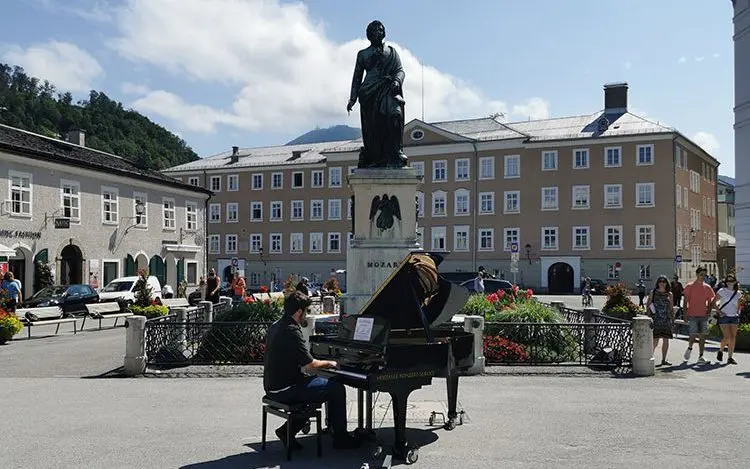
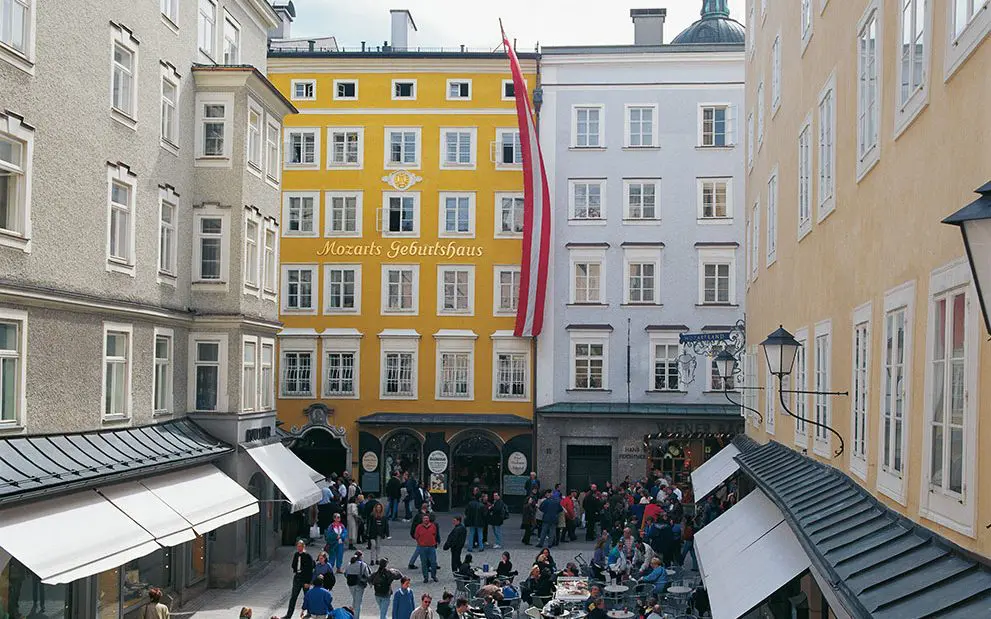
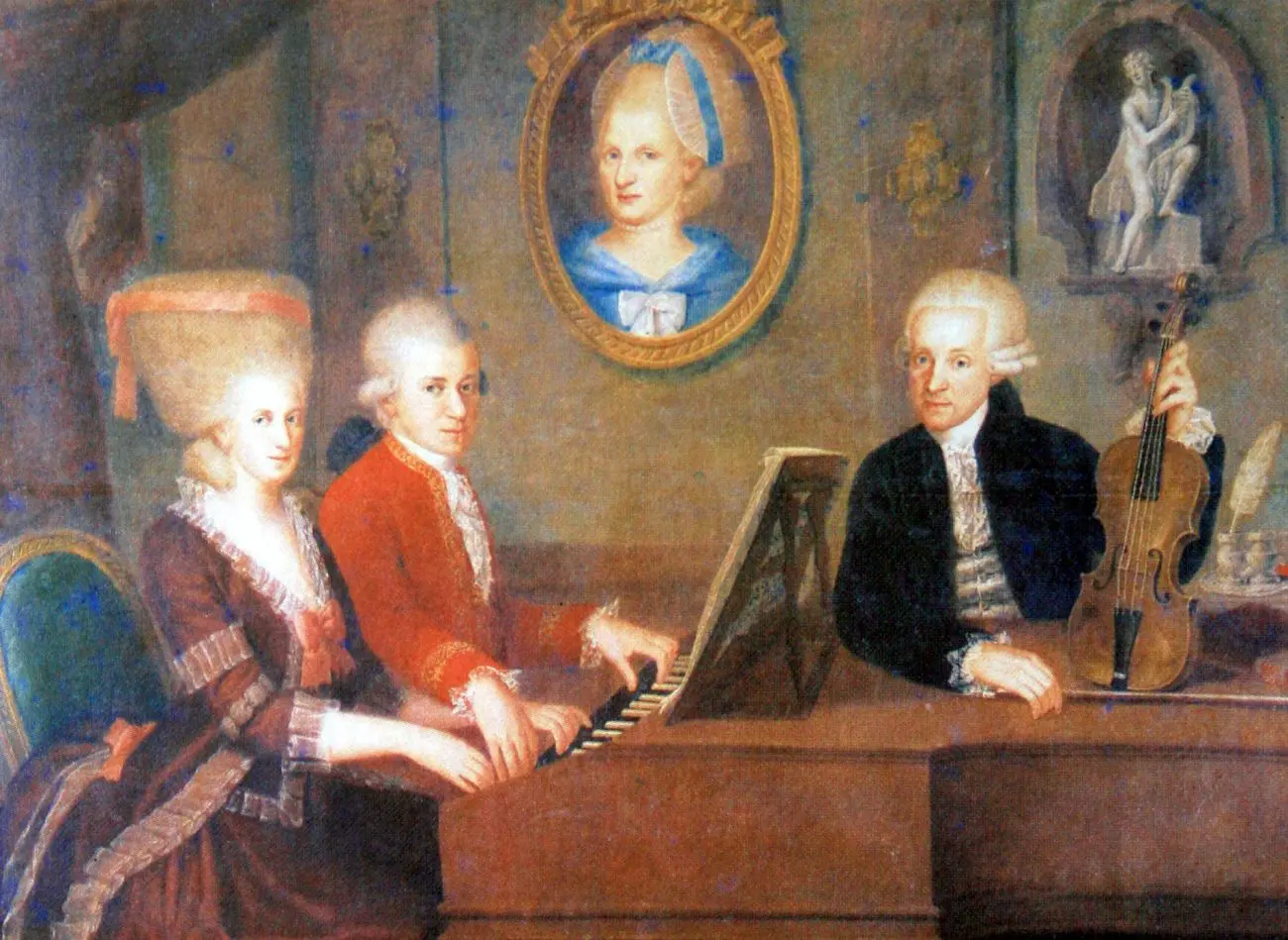
He looks calmly and stoically at the Glockenspiel, the Old and New Residence and the Salzburg Cathedral. He’s already seen a lot, the Wolferl. An upside-down helicopter, lots of shopping carts behind which it disappeared, couples in love with traditional costumes from Rupertikirtag, more or less elegant ice skaters and many a lively Christmas angel: year and day it still dominates the spacious square in the middle of Salzburg’s old town and rests on the remains of the Roman city Iuvavum . The famous son of Salzburg, born on January 27, 1756 in the house at Getreidegasse 9, as the seventh child of Leopold and Anna Maria Mozart, did not always have it easy in his hometown.
Constant conflicts with Archbishop Hieronymus von Colloredo, the constraints imposed on him by his position as concertmaster and the archbishop’s prohibition on holding lucrative concerts in Vienna led him to finally throw in the towel in Salzburg in 1781 and to live as a freelance artist in Vienna. He achieved great success there with his incomparable great operas, symphonies, great masses, cantatas and string quartets.
A few weeks after the premiere of the Magic Flute on September 30, 1791, Mozart was bedridden and died on December 5. There are as many myths about his illness as there are about his funeral. What is certain is that he was buried in an unspecified general grave at the St. Marxer Friedhof in Vienna. It was not until 17 years after his death that his widow Constanze tried to find his grave, which she no longer succeeded.
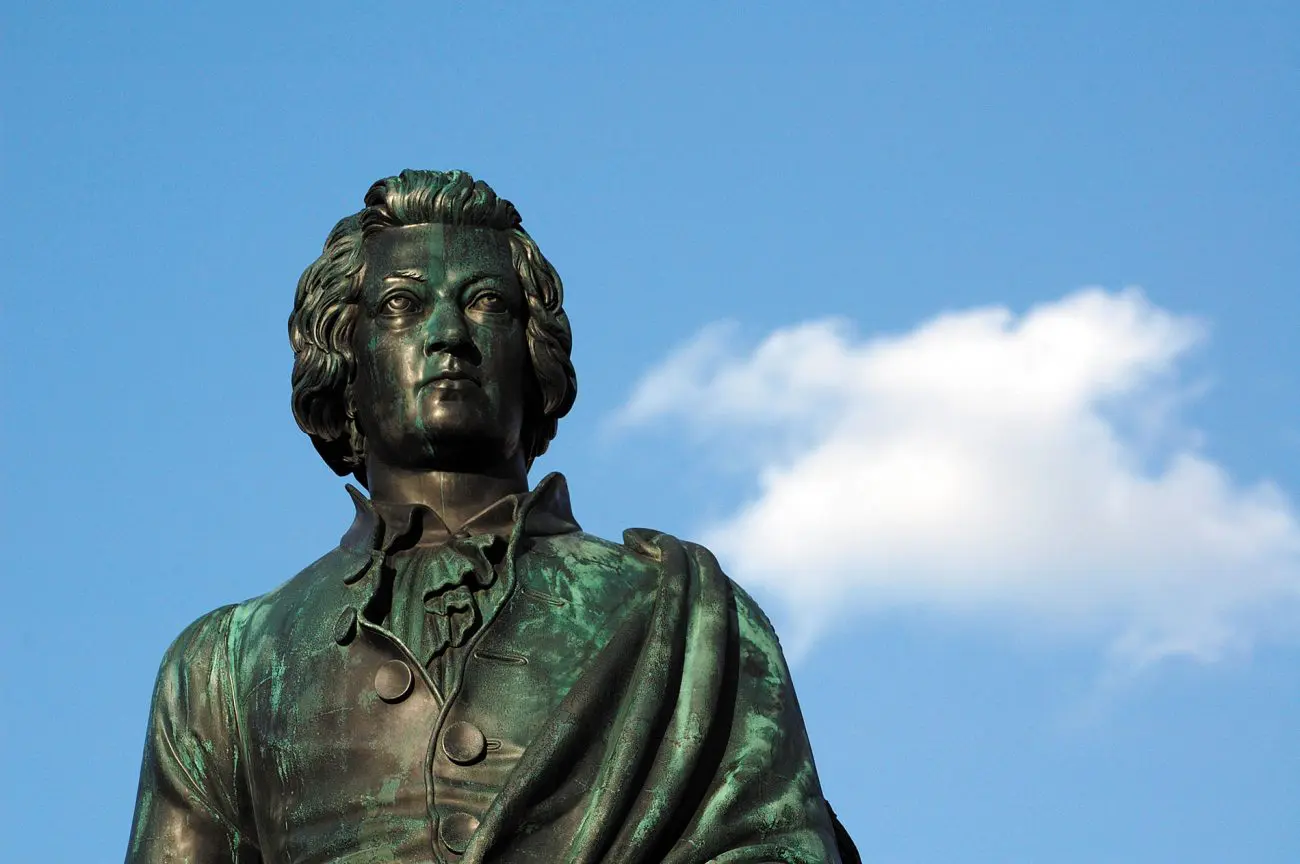
For a while, Salzburg hadn’t paid any attention to the memory of the Wolferl and didn’t want to spend any money on it. It was not until 1835 that a writer named Julius Schilling from Poznan (in present-day Poland) suggested a memorial in the old town. Generous sponsors abroad and in Vienna – including King Ludwig I of Bavaria – made a pedestal and bronze statue by Ludwig Schwanthaler possible.
The erection of the monument also turned out to be not that easy: a large Roman mosaic was recovered during the construction work and delayed the work. A replica of the saying in the mosaic “hic habitat felicitas, nihil intret mali” (happiness lives here, no evil occurs) now adorns the floor in front of the statue.
Author: Ricky Knoll